Cozy Coast
An idle fishing game that squats as a borderless widget in the corner of your screen, built solo on Electron and Phaser.
Solo runner
A game that squats in the corner of your screen
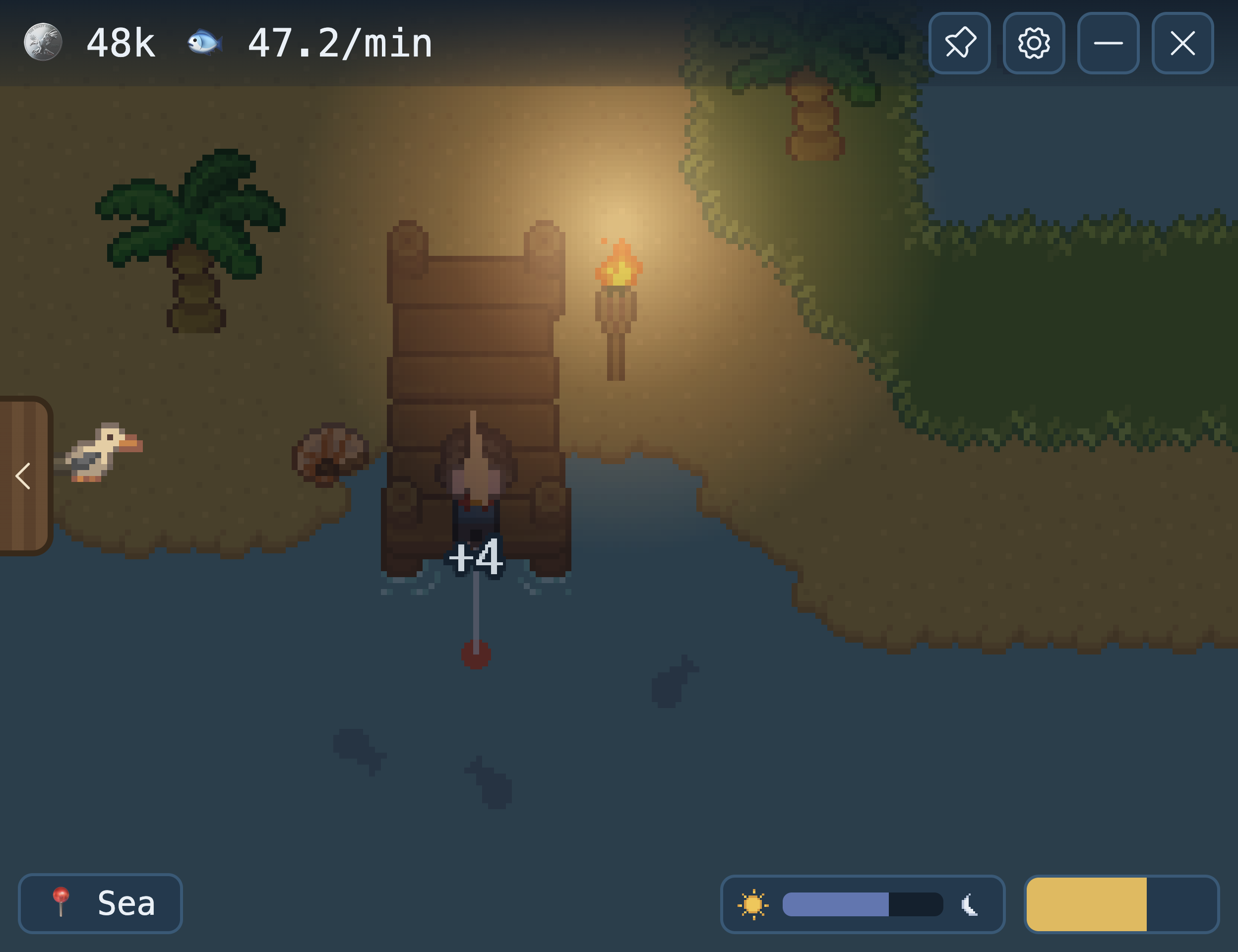
Cozy Coast is a small idle fishing game shaped like a desktop widget. A borderless window that sits in front of or behind whatever you are actually grinding on, fishing the whole time. No timers to beat, no way to fall behind. Close it and offline progress keeps ticking, then hands you the rundown of what went down while you were gone.
It dropped on Steam Early Access on 14 August 2026 for Windows and macOS, built by one choom.
- Store: Cozy Coast on Steam
- Site: cozycoast.website
- Public tally: cozycoast.website/stats
Fishing with your crew
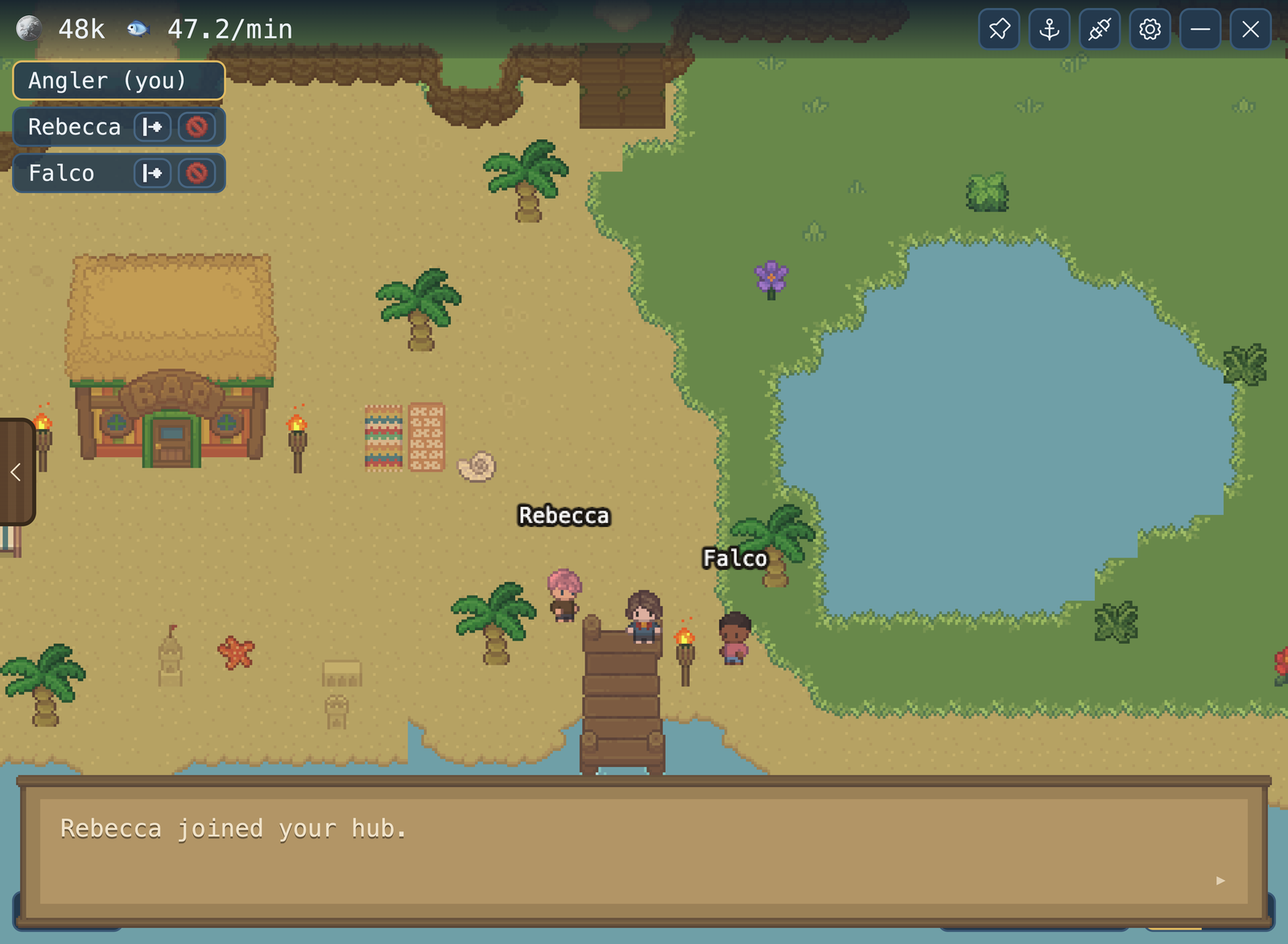
Step off the dock and a hub village opens up. Host one and pull your crew straight in from Steam, or browse the open hubs and drop into somebody else’s. Everyone walks the same village, sees each other move, and wears the threads they picked.
There are no servers behind it, choom. Steam holds the lobby list, brokers the connections and relays packets when a direct route is not there, and the host relays angler positions to everyone else.
What you do
- Four waters to work: sea, deep sea, pond and deep pond, each with its own fish pool and rod-tier ICE
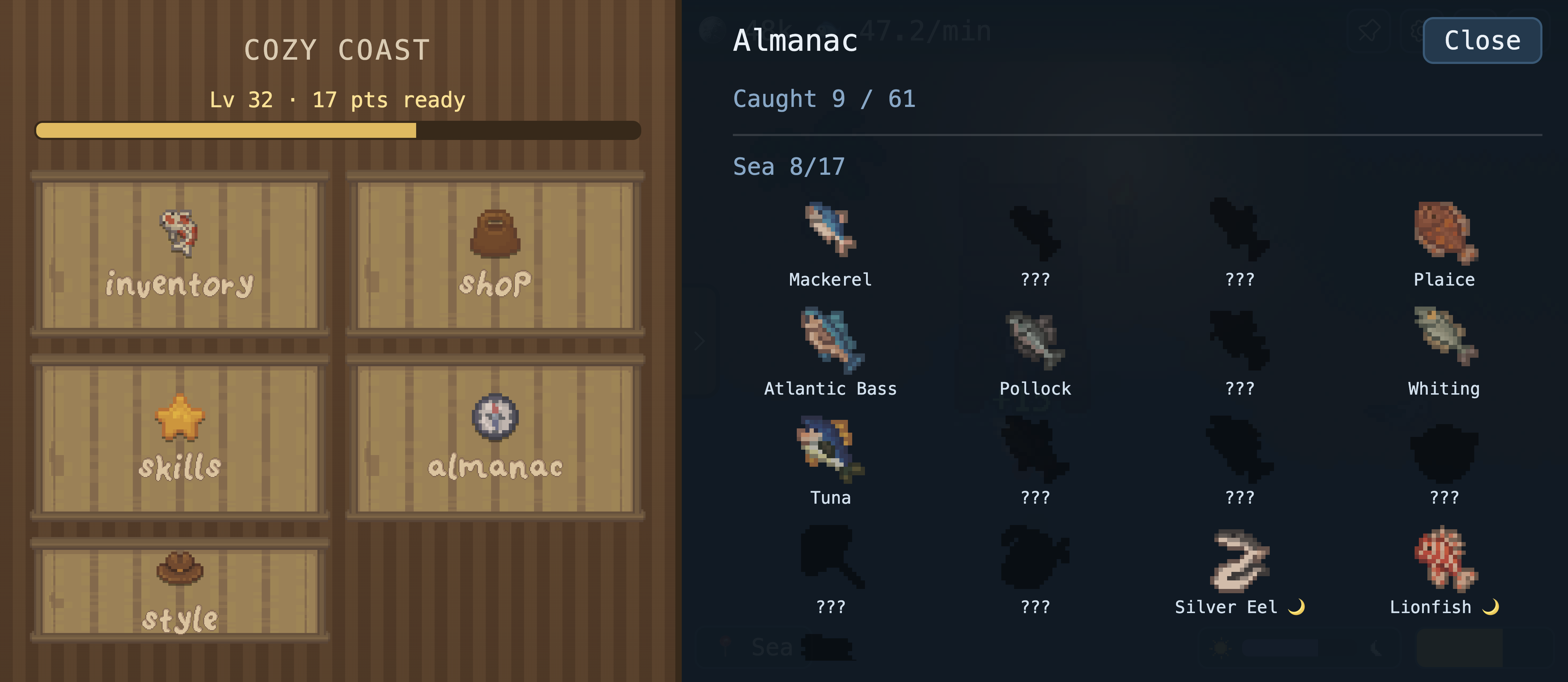
- An almanac to fill, sorted from common up to an exotic tier that only cracks open past the Aurora Rod
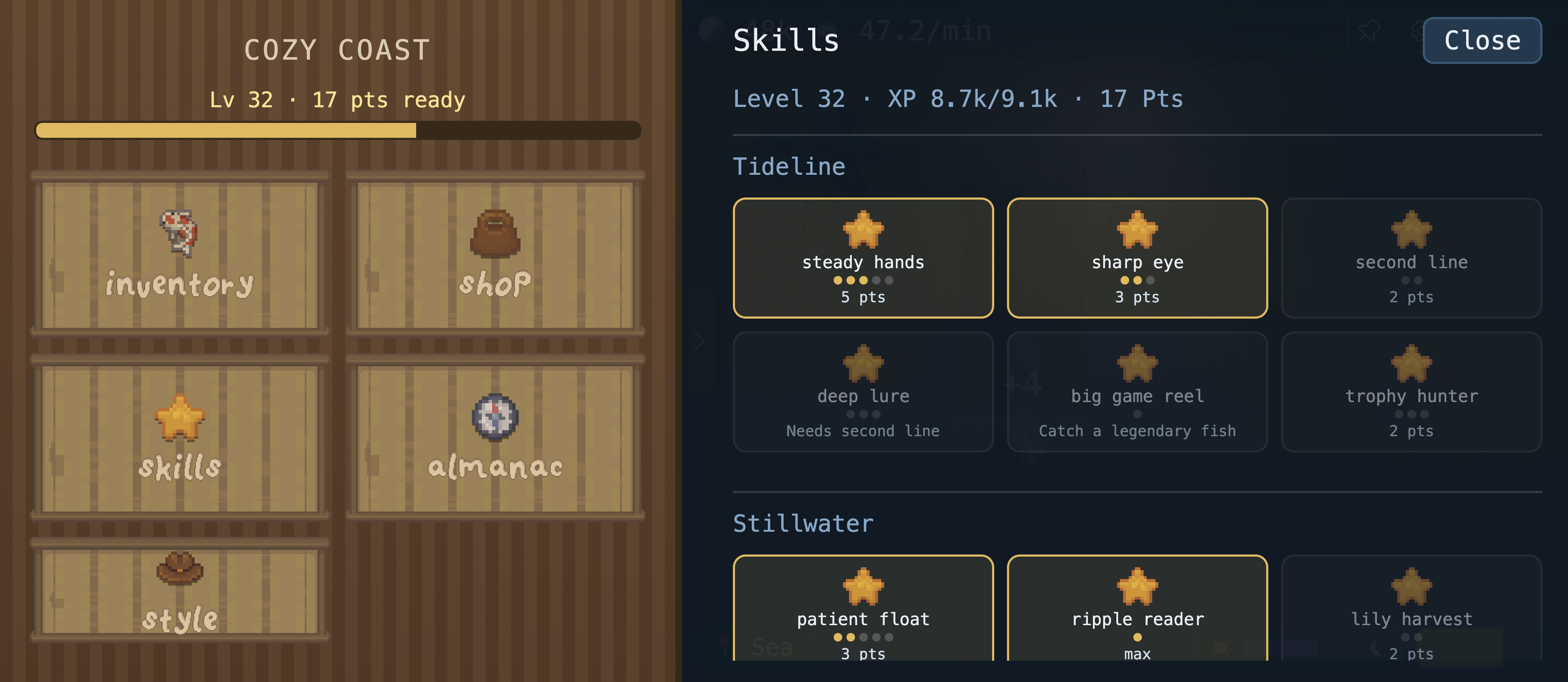
- A skill tree across three branches: Tideline, Stillwater and Shorecraft
- A shop with buy, sell, a scrapyard for salvage, and a forge that cooks material into trinkets
- Character creation, a wardrobe, an effects tab for auras, and chests that wash up on the sand
How it is built
Electron for the shell, because the product is a desktop widget first and a game second. Phaser draws the coast inside it. TypeScript runs across the main process, the renderer, and the message types shared between them. Clean loadout.
It runs zero servers. Steam hosts the lobbies, Steam Cloud holds the saves, and those saves are encrypted with a key derived from the Steam ID, so no gonk is editing them and they do not travel between accounts. One packaging pipeline spits out both platforms, into a single Steam build carrying a depot per operating system.