AI writing has a tell. I built a free tool that removes it.
Ghostwriter is a free, open-source tool that makes AI-written text read like a person wrote it, by removing the hidden characters, the giveaway words, and the report-shaped structure that flag it as machine-made.
Paste something straight out of ChatGPT into an email, and a lot of people can now tell. Not because the facts are wrong. Because of how it reads. The word “delve” showing up where nobody says “delve”. The tidy little three-item lists. Every sentence the same comfortable length as the one before it. Once you have noticed the pattern a few times, you cannot un-notice it.
Ghostwriter fixes that. It is a free, open-source tool I built at Starside, and you can grab it on GitHub right now. This post is the plain version of what it does and why you might want it.

Why does AI writing sound like AI?
Because the models all picked up the same habits. They reach for the same short list of impressive-sounding words. They love a list of exactly three things. They punctuate with the long dash that almost nobody types by hand. And they hide characters you cannot even see: invisible marks that ride along in the text and quietly flag it as machine-made.
None of this is about intelligence. A model can write a genuinely good paragraph and still stamp it with all of these tells. The tells are just habits, and habits can be removed.
The tricky part is that they hide at different depths.
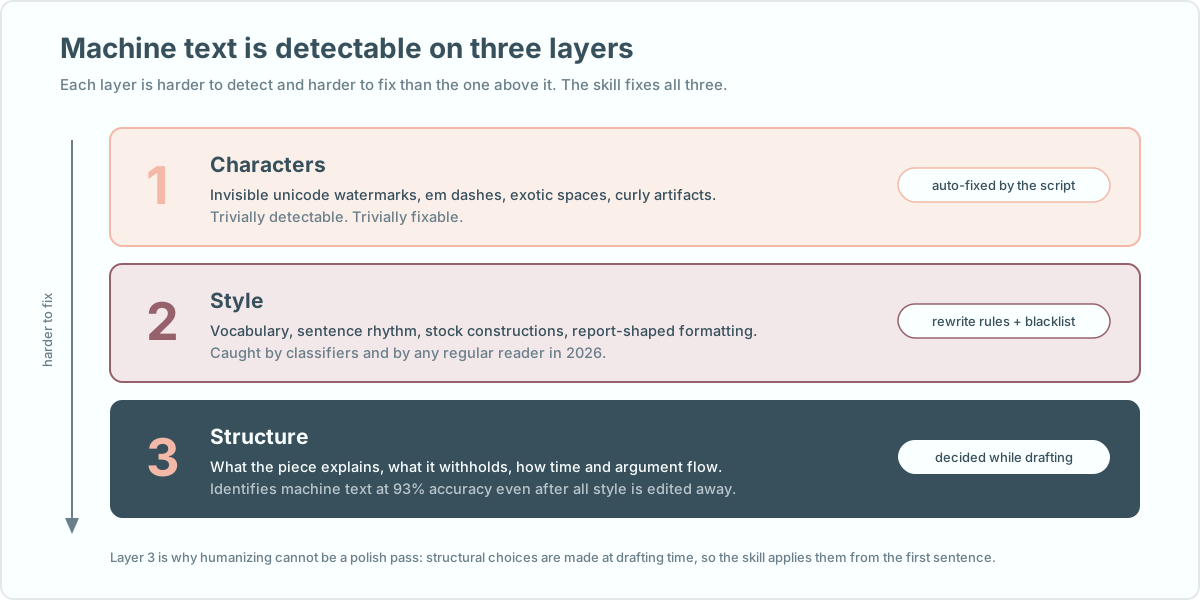
The top layer is the easy one. Hidden characters and long dashes are simple to find and delete once you know they are there. The middle layer is the words and the rhythm, the stuff a careful reader clocks without being able to name it. The bottom layer is the sneaky one: it is not any single word, it is how the whole thing is built. Whether it explains its own point at the end. Whether every thread ties up neatly. Whether it names a real thing or waves vaguely at “a well-known example”.
That bottom layer is the reason you cannot just run AI text through a “make it human” button afterwards. By then the shape is already baked in. The fix has to happen while the text is being written, not after.
The tells, in plain sight
Here are the ones you will start seeing everywhere once you know them.
Read the left column and the right column out loud. The right side is what a person would say to a colleague without rehearsing it. That is the whole test Ghostwriter applies to every line.
Does it actually work?
Yes, and I measured it rather than guessing. I ran AI-written text through ZeroGPT, one of the popular AI detectors, before and after.
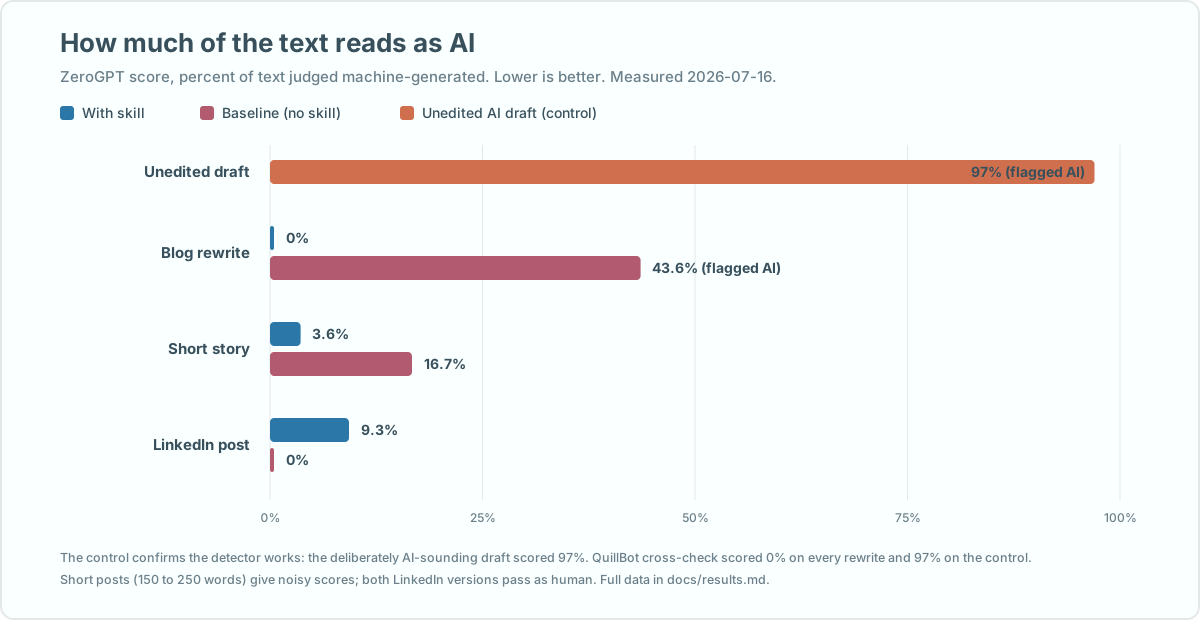
A raw AI blog draft came back flagged at 97% machine-written. The same content, rewritten with Ghostwriter, scored 0%. The detector called it human. I also ran it across three different Claude models against a plain “just don’t sound like AI” instruction, and the tool cleared nearly every check where the plain instruction kept slipping back into the old habits.
One honest caveat: detectors are noisy, especially on short posts, and no tool makes bad writing good. Ghostwriter removes the machine fingerprint. It does not give you something worth saying. That part is still on you.
Who is this for, and how do you get it?
If you write anything public with AI help, a newsletter, a LinkedIn post, product copy, a cover letter, this is for you. You do not need to know how any of it works under the hood. The one moving part you might touch is a small clean-up script that strips the invisible characters, and it runs itself when you use the tool.
It plugs into Claude and GitHub Copilot, both of which read tools from a shared folder, so installing it is copying one directory. The GitHub page has the exact steps, and it is free under an open licence with nothing to sign up for.
Then you just ask, in your own words: write this so it does not sound AI-generated. The tool does the rest, and keeps doing it from the first sentence instead of trying to paint over the cracks at the end.
If you want the background on why AI text reads the way it does, that ties into a couple of things I have written before: how to spot AI slop in the first place, and why editing your prompts matters more than clever wording. Ghostwriter is the piece that handles the last mile, so the good stuff you wrote does not get mistaken for a machine’s.